
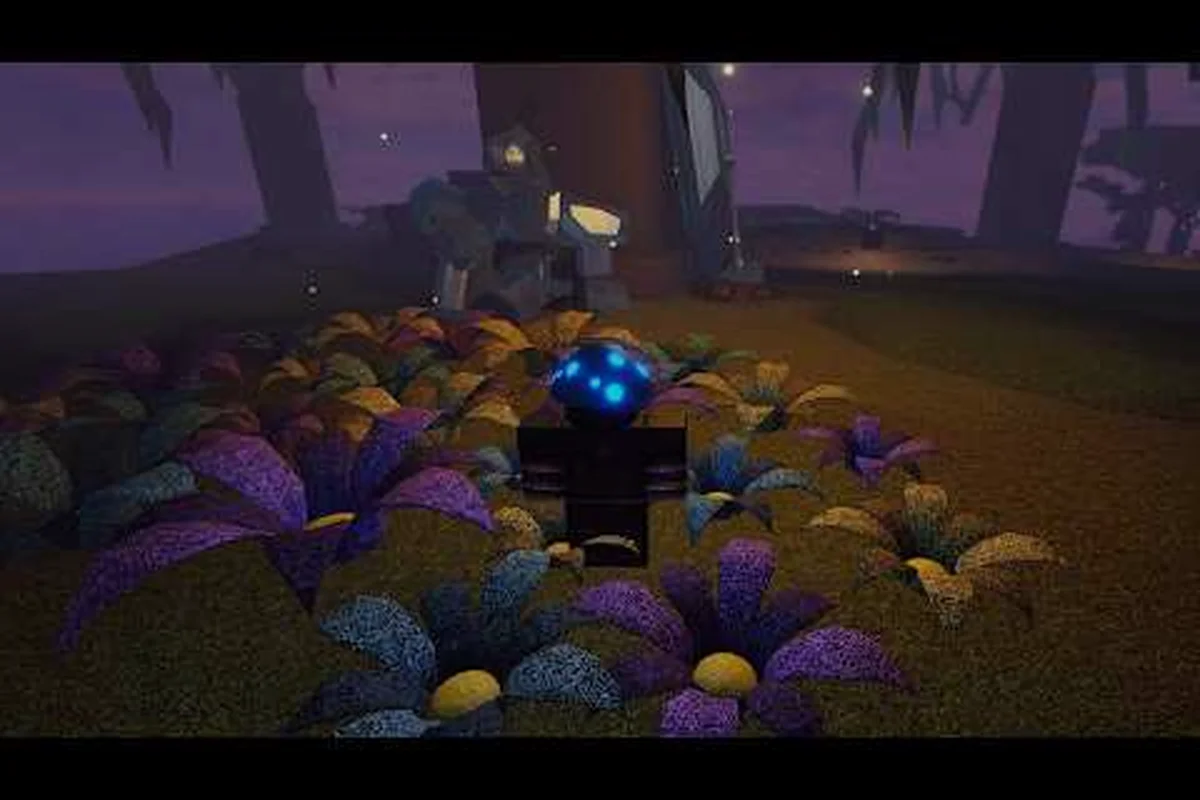
The Veil event bosses are a source of constant confusion in the community, because the name implies a fixed schedule and named rewards, but the developers have never published either. Every claim about a specific respawn timer, a specific badge name, or a specific drop table for these encounters is, as of September 2026, unverified community data — and treating it as fact is the fastest way to waste a farming session. The goal of this guide is to lay out what is actually known about The Veil event bosses, where the community has filled in the blanks, and how to plan a run that doesn't depend on guessing numbers that nobody has measured.
The core issue is that The Veil's boss design is encounter-based, not calendar-based. Twelve named bosses are documented in community research — The Stormcaller, The Beholder, Smelter Demon, Hiveling Titan, Goblin Warlock, The Puppeteer, The Festering Wound, The Crowned Nothing, The Masquerade, The Unfinished, The Cell of Life, and a community-labelled "Bell Boss" — and each one returns on its own internal cycle, not on a shared global event clock. That single fact reframes almost every "event boss" guide on the wider web.
How The Veil's Boss System Actually Works
The Veil is a Roblox action-RPG built around zone progression rather than scheduled world events. The world is divided into The Glade (surface hub), The Maze (night-only dungeon), and The Pale (the Primordial Era endgame zone), and the boss roster is ordered roughly along that path: early world bosses first, The Pale and Primordial Era bosses last, with The Cell of Life sitting as the current endgame encounter. This ordering is the reason a "timed event" framing fails — there is no public timer table, and as covered in this The Veil YouTube breakdown, the boss sequence is a fixed progression rather than a documented timed-event calendar.
The practical consequence is that "event boss" in The Veil generally refers to one of two things: a named boss with a respawn cycle measured in real-time minutes, or a rare night-only encounter inside The Maze such as the community-named Ancient Bones rare spawn. Neither behaves like a public world event in the MMO sense, and neither has a published timer.
What "Event Boss" Usually Means in Practice
Players use "event boss" to describe three different situations, and they require very different planning. The table below separates them clearly.
| Encounter Type | Example | Where It Lives | Documentation Status |
|---|---|---|---|
| Named zone boss | The Stormcaller | The Glade surface | Documented, timer unverified |
| Hidden boss | The Puppeteer | The Maze, hidden trigger | Documented, entry quest unverified |
| Rare night spawn | Ancient Bones (community name) | The Maze, night cycle | Community nickname only |
The first row is the bread-and-butter loop, the second is a side objective that requires a trigger nobody has documented cleanly, and the third is a community coin-flip that depends on the night cycle aligning with a player being in the right corridor. All three are routinely lumped together under "event boss," which is the root of most misinformation.
Why the Zone Order Matters
Skipping ahead of the zone order is the most common reason a run fails, because The Veil's gating is tuned for the level of a player who has just cleared the previous zone. A player who fast-travels to The Pale via the Obelisk network and tries to fight The Cell of Life at low gear will see a wall, not a "timed event." The boss is fixed — you are simply undergeared for the phase thresholds. Knowing this saves more runs than any timer guide.
What the Community Has Actually Verified About Badges
The Veil has a documented Prestige system with milestone badges at ranks 5, 10, 15, and 20, but these are progression badges, not per-boss kill badges. Several badge names appear in community search queries — the unverified strings "the veil eye gouged badge", "the veil storm calmed badge", and "the veil roar silenced badge" are typical examples — and they are almost certainly named-event badges, but the developers have not published a complete badge list, and community research has not produced a reliable confirmation that any of these specific names correspond to a documented, currently obtainable item.
This is an important distinction for farming runs. Players searching for "the veil eye gouged badge" are usually looking for a proof-of-defeat badge tied to a specific named boss, but the documented badge architecture in The Veil is a Prestige ladder, not a kill-tracker. The right way to read those search strings is as a wishlist: a community-suggested name that may or may not be a real, obtainable badge. Treat all of them as unverified until the developers publish an in-game badge catalogue.
The Badge Reality Table
| Badge Source | Type | Obtainable? | Verification |
|---|---|---|---|
| Rank 5, 10, 15, 20 milestones | Prestige ladder | Yes | Documented |
| "the veil eye gouged badge" search string | Community name | Unverified | Search query only |
| "the veil storm calmed badge" search string | Community name | Unverified | Search query only |
| "the veil roar silenced badge" search string | Community name | Unverified | Search query only |
| Per-boss kill badges | Hypothetical | No list published | Not documented |
Players who plan a run around a specific named badge are gambling. The safer bet is the Prestige ladder, which is the only badge track the developers have actually published.
Why the Badge Market Exists
Because a confirmed badge list has never been published, a secondary market of "badge guides" and "badge proof" videos has filled the gap, and most of them are recombinations of the same unverified names. The reliable approach is to ignore specific badge names entirely, focus on the published Prestige milestones, and treat any third-party badge-name claim as a hypothesis rather than a fact. The community's enthusiasm for these names is real; the developers' silence on them is also real, and the gap between the two is where most farming-time gets lost.
The Respawn Timer Question
The single most searched piece of information in this category is "the veil boss respawn timer," and the honest answer is that the developers have not published official respawn-timer values. Community estimates for common named bosses tend to cluster in the 5–15 minute range based on repeat-kill sessions, but the variance is wide, the methodology is informal, and the values shift when the developers push a hotfix. Pinning a run to a specific number — "exactly 8 minutes" — is the kind of detail that quietly fails the moment a patch lands.
What the community has consistently observed is qualitative: bosses come back on a timer, the timer is short enough that camping the spawn is viable, and the timer is not server-wide, so switching instances after a kill is sometimes faster than waiting. The drop categories are also broadly consistent — as covered in the community-farming footage breakdowns, boss drops fall into armor pieces, weapon chances, and currency bundles such as Sins, Offerings, Ichor, Silver, Gems, and Fire Essence — but no exact per-boss timer, no Silver payout, and no drop rate has been confirmed by the developers. Treat any precise number circulating online as unverified, and the entire "event timer" framing of The Veil bosses stops being a useful concept.
A Practical Timer Framework
| Step | Action | Why It Matters |
|---|---|---|
| 1 | Kill the boss once and note the server time | Establishes your local reference point |
| 2 | Stay in the same instance and wait | The internal cycle is shorter than a server hop |
| 3 | Use the Obelisk network between kills | Fast travel resets your position without exiting |
| 4 | Drop the kill log only after a confirmed second clear | Filters out "I think it was 7 minutes" hearsay |
A player who treats each respawn as a measurement rather than a guarantee will save more time than a player who memorises a number from a YouTube thumbnail. Solo planning for a spawn run is covered in depth in the The Veil how-to-solo-bosses guide, which walks through the gear-threshold and positioning logic that makes repeat kills viable.
Why Server Hopping Is a Coin Flip
Switching servers to skip a respawn wait is a real strategy in many Roblox games, but The Veil's spawn architecture is tied to instance state, not to a global clock. The worst-case outcome of a server hop is that the new instance's spawn cycle is fresh but the boss is mid-fight with another group, and the second-worst outcome is that the boss is on a longer cycle than the one you left. The only consistent win is to stay, learn the cycle on one instance, and write down the actual number once the second clear lands.
How to Plan a Spawn Run Without Guessing
A spawn run in The Veil is a sequence of decisions, and the order of those decisions matters more than any specific timer value. The framework below is the one that the wider community farming footage converges on: arrive, scout, kill, log, repeat, and only commit to a longer session once the cycle is measured, not assumed.
The first decision is the zone. The Glade is the right starting zone for almost every player, because the early world bosses — The Stormcaller and The Beholder — are tuned for first-clear gear and have the shortest documented respawn cycles. The Maze is the second stop, because the night-only cycle is its own gate, and The Pale is reserved for players who have already cleared the earlier zones and have the gear thresholds to survive the Crowned Nothing and The Cell of Life phase windows. Skipping straight to The Pale is the single most common mistake in The Veil's boss progression, and it is the one that the boss order exists to prevent.
The Spawn-Run Decision Table
| Decision | Recommended Choice | Reasoning |
|---|---|---|
| Starting zone | The Glade | Shortest documented cycles, lowest gear floor |
| Class for first clear | Verdant or Gladiator | Sustain + telegraph handling |
| Server strategy | Stay on one instance | Internal cycle is shorter than a hop |
| Logging | Note kill + respawn time | Filters unverified numbers from your data |
| When to move to The Pale | After Crowned Nothing is consistent | Gear-threshold check passed |
The second decision is the build. The Veil's eight documented classes — Verdant, Gladiator, Cyst Disciple, Cultist, Marauder, Sky Sentinel, Crusader, Nightshade — each have a different relationship to the boss phase windows, and the Weaving combat system rewards positioning over raw stats. Players chasing solo clears of The Cell of Life should treat the build as a function of the boss's telegraph, not of the player's preferred weapon. For an in-depth walkthrough of a specific mid-game encounter, the The Veil Goblin Warlock boss breakdown covers the positioning logic that makes the fight survivable without overcommitting to a damage rotation.
A Step-By-Step First Session
-
Land in The Glade, identify the next world boss spawn. Most players will face The Stormcaller first, because the zone is gated to that encounter.
-
Clear the trash mobs first. The Veil's Weaving system punishes players who pull a boss into a pack, and a clean pull is faster than any "skip" trick.
-
Note the kill time, then the respawn time, with a stopwatch. Two data points is the minimum to filter out the noise.
-
Repeat the cycle twice before extending the session. A second confirmed clear turns a guess into a measurement.
-
Only move to The Maze after two clean Glade cycles. The Maze is a night-only zone, and arriving in daytime is a wasted run.
-
Treat The Pale as a separate project. The endgame gear floor is real, and an early Cell of Life attempt is the most common way to burn a session for nothing.
A player who follows this sequence on their first night will leave with a measured respawn interval for at least one boss, a working class build, and a clear sense of the gear threshold for the next zone. That is more progress than most "event boss" guides deliver, because most of them are built on numbers that nobody has measured.
Frequently Asked Questions
What are The Veil event bosses?
The Veil event bosses are community shorthand for the twelve documented named encounters — The Stormcaller, The Beholder, Smelter Demon, Hiveling Titan, Goblin Warlock, The Puppeteer, The Festering Wound, The Crowned Nothing, The Masquerade, The Unfinished, The Cell of Life, and the community-labelled Bell Boss. They are fixed zone encounters, not a scheduled world event, and no official calendar has been published.
Is there an official respawn timer for The Veil bosses?
No. The developers have not published respawn-timer values for any of The Veil bosses, and community estimates cluster in the 5–15 minute range based on informal testing. Treat any specific number — including the common search query "the veil boss respawn timer" — as unverified until the developers publish a timer table or a community source releases reproducible measurements across multiple instances.
Are the badge names "the veil eye gouged badge", "the veil storm calmed badge", and "the veil roar silenced badge" real?
Unverified. The only documented badge track in The Veil is the Prestige ladder at ranks 5, 10, 15, and 20. The three badge-name search strings above appear in community queries but have not been confirmed in any official badge list, and treating them as obtainable targets is gambling with farming time. Focus on the Prestige ladder, and treat the named-badge searches as community wishlists.
What is the best boss to farm in The Veil?
The best boss to farm depends on the player's current zone and gear threshold, not on a global "best" list. Early-game players get the cleanest cycles from The Stormcaller and The Beholder in The Glade, mid-game players should focus on Goblin Warlock and The Puppeteer in The Maze, and endgame players chase The Crowned Nothing and The Cell of Life in The Pale. The full ranking logic is covered in the broader boss guide, and a useful entry point is the The Veil boss guide, which maps the roster to gear thresholds rather than to a single "best" pick.
Can badges and respawns be tracked reliably in 2026?
Reliable tracking requires two things: a stopwatch and a second confirmed clear. A single kill with a guessed respawn is the kind of data that produces the "it took 8 minutes" claims that dominate community videos, and those claims are how unverified numbers propagate. The reliable approach is to log the kill time, wait in the same instance, log the respawn time, repeat once more, and only then commit the number to a personal spreadsheet. Anything shorter is a guess, and The Veil's boss architecture rewards measured cycles over assumed ones.